 $5,500,000
Active
$5,500,000
Active
816 Medea Way Denver, Colorado
5 Beds 7 Baths 5,931 SqFt 0.24 Acres
Active Listing courtesy of Compass - Denver
 $3,895,000
Active
$3,895,000
Active
845 Medea Way Denver, Colorado
4 Beds 5 Baths 5,075 SqFt 0.13 Acres
Active Listing courtesy of The Agency - Denver
 $3,250,000
Active
$3,250,000
Active
1035 Columbine Street Denver, Colorado
6 Beds 6 Baths 5,459 SqFt 0.14 Acres
Active Listing courtesy of Compass - Denver
 $2,810,000
Active
$2,810,000
Active
1074 Cook Street Denver, Colorado
6 Beds 7 Baths 5,322 SqFt 0.14 Acres
Active Listing courtesy of Milehimodern
 $2,750,000
Active
$2,750,000
Active
850 St Paul Street Denver, Colorado
5 Beds 5 Baths 5,128 SqFt 0.15 Acres
Active Listing courtesy of Douglas Elliman Real Estate
 $2,550,000
Active
$2,550,000
Active
3045 Ohm Way Denver, Colorado
5 Beds 4 Baths 4,931 SqFt 0.24 Acres
Active Listing courtesy of LIV Sotheby's International Realty
| Feature | Details |
|---|---|
| Median Home Price | $900K – $2.2M+ |
| Typical Lot Size | 0.1 – 0.2 acres |
| Top Schools | Denver Public Schools (Steele Elementary, South High School) |
| Commute to Downtown | 10 – 15 minutes |
| Vibe | Walkable, charming, and community-driven with beloved local businesses |
Bonnie Brae Denver Homes for Sale — Walkable Charm and Historic Character
Looking for Bonnie Brae Denver homes for sale? You’ve found one of Denver’s most delightful and walkable neighborhoods — a compact, character-rich community centered around a beloved commercial district that feels more like a small-town village than a pocket of a major metropolitan area. Sara Garza, luxury real estate specialist with LIV Sotheby’s International Realty, knows Bonnie Brae intimately and can help you navigate this charming neighborhood’s tight-knit real estate market.
Bonnie Brae (Scottish for “beautiful hill”) is tucked into South Denver between University Boulevard and Steele Street, just south of Exposition Avenue. Despite its small footprint, this neighborhood punches far above its weight in terms of charm, walkability, and community spirit. Anchored by its iconic commercial corner — where the legendary Bonnie Brae Ice Cream has been scooping since 1986 — the neighborhood offers a lifestyle that’s both deeply rooted in Denver tradition and perfectly suited to modern living.
What Makes Bonnie Brae Special
Bonnie Brae’s magic lies in its scale and authenticity. This is a neighborhood designed for walking, where residents stroll to the ice cream shop on summer evenings, pick up a bottle of wine at Bonnie Brae Liquor, grab a pint at the Bonnie Brae Tavern (a Denver institution since 1934), and know the shopkeepers by name. In an era of homogenized suburban development, Bonnie Brae’s independently owned businesses and human-scale streetscape feel like a treasure.
The Bonnie Brae commercial district — essentially a single charming intersection — is the neighborhood’s heart. Beyond the ice cream shop and tavern, you’ll find a dry cleaner, a florist, a wine shop, and other small businesses that serve the daily needs of the surrounding residential community. It’s the kind of neighborhood commercial center that urban planners try to recreate but that Bonnie Brae has maintained organically for nearly a century.
Community bonds in Bonnie Brae are strong. The neighborhood’s small size fosters the kind of genuine connections that are increasingly hard to find — neighbors look out for each other, kids play in front yards, and the sense of belonging is palpable. Annual community events, informal gatherings, and the simple daily ritual of walking to the commercial district keep the social fabric tight.
Bonnie Brae also benefits from an exceptional location. Sandwiched between Washington Park to the west, Observatory Park to the south, and Belcaro to the east, residents have easy access to some of Denver’s best parks, schools, and amenities. Cherry Creek is just a short drive or bike ride north, and downtown Denver is equally accessible.
Bonnie Brae Home Styles & Architecture
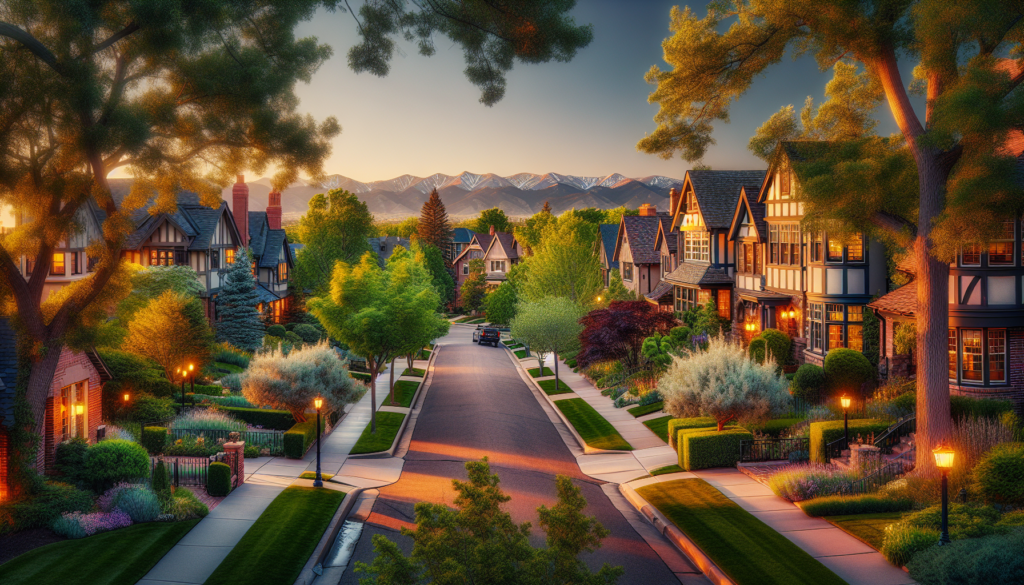
Bonnie Brae’s homes are as charming as its commercial district. The neighborhood’s housing stock dates primarily from the 1920s through the 1950s, creating a cohesive architectural character that rewards a leisurely stroll down any block.
English Tudor cottages are perhaps Bonnie Brae’s most iconic style — brick homes with steeply pitched roofs, arched doorways, leaded glass windows, and fairy-tale charm. These homes are typically 1,200–2,000 square feet on the main levels, with finished basements adding valuable living space. Their craftsmanship and character make them perennial favorites among buyers who value authenticity over square footage.
Craftsman bungalows are also well-represented, with their signature deep porches, exposed woodwork, and cozy proportions. Denver Squares — the city’s classic early-1900s home type — offer more formal layouts with center entries and symmetrical facades. Scattered Colonial Revival and Cape Cod-style homes round out the architectural mix.
Mid-century ranch homes from the 1950s appear on some blocks, offering single-story living and the clean lines of their era. Selective new construction has introduced modern designs to the neighborhood, though the compact lots (typically 4,500 to 6,500 square feet) and the neighborhood’s architectural character tend to keep new builds at a human scale that respects the surrounding context.
Interior updates are common across all styles — renovated kitchens, updated bathrooms, and finished basements that create additional bedrooms, family rooms, and home offices. The best renovations in Bonnie Brae preserve the homes’ original character — hardwood floors, millwork, and architectural details — while adding modern functionality.
Bonnie Brae Real Estate Market
The Bonnie Brae Denver homes for sale market is characterized by strong demand, limited inventory, and a loyal buyer base that specifically targets this neighborhood for its charm and walkability. Home prices typically range from $700,000 to $1.8 million, with most transactions falling in the $800K–$1.3M range for well-maintained or updated character homes.
Updated Tudors and craftsman bungalows in excellent condition command premiums, as do homes with finished basements that expand the functional living space. New construction, when it appears, tends to sell at the upper end of the range. Unrenovated or estate-condition homes offer opportunities for buyers willing to invest in updates — these properties can represent strong value in a neighborhood with consistent long-term appreciation.
Because Bonnie Brae is small — only a few hundred homes in total — inventory is always tight. It’s not unusual for months to pass without a single home coming to market. This scarcity means that when a desirable property does list, it attracts immediate attention from informed buyers. Off-market sales are not uncommon, making it critical to work with an agent like Sara Garza who has active connections within the neighborhood.
Schools & Education in Bonnie Brae
Bonnie Brae is served by Denver Public Schools. Slavens K-8 School — one of DPS’s highest-performing schools — is the primary neighborhood school and a significant draw for families considering the area. Slavens’ strong academics, engaged parent community, and K-8 format make it a standout within the district.
University Park Elementary also serves portions of the neighborhood. For middle and high school, students attend Merrill Middle School and George Washington High School or access DPS’s choice enrollment options, which include magnet schools, charter schools, and the Denver School of the Arts.
The proximity of the University of Denver adds educational enrichment opportunities for families, including youth programs, cultural events, and access to DU’s campus resources. Private school options in the surrounding area include Graland Country Day, St. Vincent de Paul, and Denver Academy.
Dining, Shopping & Entertainment
Bonnie Brae’s commercial district may be small, but it’s perfectly formed. Bonnie Brae Ice Cream is a Denver institution — lines out the door on summer evenings are a beloved neighborhood tradition, with dozens of homemade flavors that keep regulars coming back for decades. The Bonnie Brae Tavern, serving pizza and drinks since 1934, is one of Denver’s oldest continuously operating restaurants and a community gathering spot that feels like an extension of everyone’s living room.
Bonnie Brae Liquor offers an exceptional wine and spirits selection, and the handful of other small businesses in the district provide convenience with character. For more extensive dining and shopping, residents easily access South Gaylord Street in Washington Park, Cherry Creek North, and the South Broadway corridor — all within minutes.
Outdoor recreation is abundant. Washington Park is a short walk west, offering 165 acres of green space, trails, and lakes. The Cherry Creek Trail provides connectivity for cyclists and runners, and the DU campus offers additional walking paths and green space. For cultural programming, the Newman Center for the Performing Arts at DU and the galleries and theaters of Cherry Creek and downtown Denver are all easily accessible.
Why Work with Sara Garza in Bonnie Brae
In a neighborhood as small and tightly held as Bonnie Brae, relationships matter more than anywhere else. Sara Garza’s connections within the community, her understanding of what makes each block and home style unique, and her ability to identify off-market opportunities give her clients an edge that’s hard to replicate. Backed by the resources of LIV Sotheby’s International Realty, Sara brings world-class marketing and a global buyer network to even the most intimate neighborhood transactions.
Whether you’re drawn to Bonnie Brae’s Tudor cottages, craftsman charm, or village-like walkability, Sara will help you find — or sell — the right home with care, expertise, and genuine enthusiasm for this special community. Explore more South Denver neighborhoods or contact Sara today to discuss your Bonnie Brae real estate goals.
Frequently Asked Questions About Bonnie Brae
Where is Bonnie Brae in Denver?
Bonnie Brae is a small neighborhood in South Denver, located between University Boulevard and Steele Street, south of Exposition Avenue. It sits adjacent to Washington Park, Observatory Park, and Belcaro, and is just a short distance from Cherry Creek and downtown Denver.
What is Bonnie Brae known for?
Bonnie Brae is best known for its charming walkable commercial district, anchored by the legendary Bonnie BraeIce Cream shop and the historic Bonnie Brae Tavern (operating since 1934). The neighborhood is beloved for its character homes, tree-lined streets, and strong community spirit.
What are home prices in Bonnie Brae?
Bonnie Brae home prices typically range from $700,000 to $1.8 million, with most sales falling between $800,000 and $1.3 million. The neighborhood’s limited inventory and strong demand keep prices robust, particularly for well-maintained Tudor and craftsman homes.
Is Bonnie Brae walkable?
Extremely. Bonnie Brae is one of Denver’s most walkable neighborhoods. The commercial district with its shops and restaurants is accessible on foot from virtually every home in the neighborhood, and nearby Washington Park, South Gaylord Street, and DU campus amenities are all within easy walking or biking distance.
What types of homes are in Bonnie Brae?
You’ll find lovely Tudor-style homes, Craftsman bungalows, and brick ranches, many dating to the 1930s-1950s. There are also some newer luxury builds and renovations. The homes have wonderful character, and I love helping buyers appreciate the architectural details that make each property special.