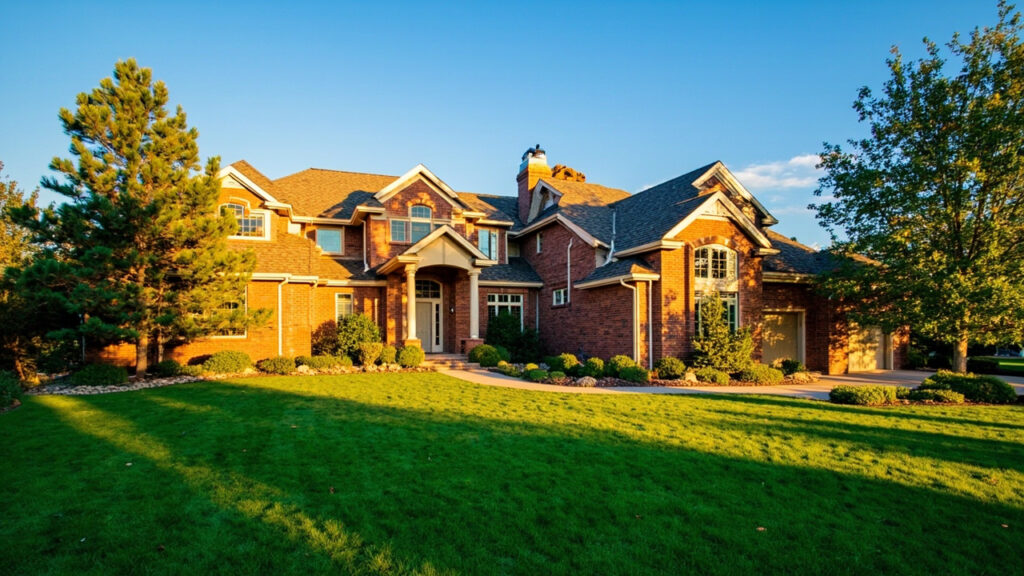
Cherry Hills Village is one of the few places in the Denver metro where the term luxury home actually understates what you are looking at. Buyers who come to me after searching for luxury homes in Cherry Hills Village — or, as many do, after landing on the neighborhood through a broader search for what the Denver area has to offer at the top of the market — consistently tell me they were not prepared for how different this city is from everything else they had toured. The lots are bigger, the privacy is more real, and the price per square foot tells a different story than the list price alone suggests.
What do luxury buyers need to know about Cherry Hills Village in 2026?
Cherry Hills Village is an independent incorporated city — not a Denver neighborhood — with a two-acre minimum lot size that defines its entire market character. Entry-level homes start around $2M, with most transactions between $3M–$7M. The city’s privacy, equestrian zoning, and proximity to downtown make it one of the most distinctive luxury markets in the Denver metro.
I have worked across South Denver’s luxury market for two decades, and Cherry Hills Village remains one of the most distinctive and most misunderstood markets I work in. This is what I want buyers to actually understand before they schedule their first tour.
What Cherry Hills Village Is — and What It Is Not
Cherry Hills Village is an incorporated city, not a neighborhood within Denver. That distinction matters in ways buyers do not always anticipate. It has its own city government, its own public works, and its own character that has been deliberately preserved through zoning and development restrictions. The city maintains a two-acre minimum lot size for residential properties, which is the single most important fact shaping the real estate market there. When you tour a home in Cherry Hills Village, you are not looking at a large suburban lot. You are looking at land at estate scale within twelve miles of downtown Denver.
The comparison that resonates most with buyers who have moved here from the coasts is that Cherry Hills Village occupies the same psychological space as the estate enclaves outside major cities that you simply do not expect to find this close to an urban core. The privacy is not an amenity layered onto a standard subdivision — it is structural, baked into the land itself through minimum lot requirements and the city’s long-standing commitment to keeping its residential character intact.
What the Homes Are Like
The housing stock in Cherry Hills Village is genuinely varied, which surprises buyers who expect uniformity at this price point. You will find mid century ranch homes on two or three acres that have been renovated over the decades, sitting alongside newer construction — post-2000, sometimes post-2015 — that was built on subdivided or scraped lots at a scale that reflects current luxury buyer expectations. The newer homes tend to run large: five thousand, seven thousand, ten thousand square feet or more, with finishes that are competitive with anything you would find in comparable estate markets across the country.
The older homes are more interesting, in my view. Many of them were built in the 1950s and 1960s and have been expanded, updated, and renovated multiple times over the decades. When they are done well, they have a quality that new construction rarely achieves — mature landscaping, established trees, a sense of place that comes from land that has been cared for over generations. When they are not done well, or when they have not been updated in fifteen years, you are looking at a substantial renovation project on top of a purchase price that already reflects the land value.
Equestrian properties deserve their own mention. Cherry Hills Village has zoning that permits horses, and a meaningful portion of the city’s properties include paddocks, stables, and riding areas. Buyers who have no interest in equestrian features should know that these properties exist and are priced accordingly — but they should also know that many of the city’s most desirable homes have no equestrian infrastructure at all, and the presence of horse properties in the broader market does not affect what buyers without equestrian needs will be evaluating.
Price Ranges and What Drives Value in 2026
The entry level in Cherry Hills Village — a phrase that takes some adjustment — starts around $2 million. At that price you are typically looking at an older home, possibly unrenovated, on a standard two-acre lot. The majority of the market transacts between $3 million and $7 million, which covers a wide range of home sizes, conditions, and lot configurations. Above $7 million, you are looking at the city’s largest properties, its most comprehensively renovated estates, and its newer custom construction.
What drives value here is not square footage alone, though square footage matters. Lot position, privacy, the quality of the build, the condition of the landscaping, and proximity to Cherry Creek Country Club or the city’s trail system all factor into how a property is priced and how quickly it sells. I work with sellers in Cherry Hills Village who consistently hear from buyers that they felt a property’s privacy level was either better or worse than the list price implied — and that gap between expectation and experience shapes offer decisions at every price point.
Days on market for luxury properties in Cherry Hills Village have historically been longer than in the broader Denver market. Buyers in this tier take their time, and sellers who price aggressively tend to sit. The homes that move well are priced with genuine attention to current comps, not to what the seller believes the home should be worth based on what they paid or what they have spent.
What Buyers Consistently Underestimate
After many years of working in this market, the things buyers consistently underestimate fall into a few reliable categories.
The first is land maintenance. Two to four acres in the Denver metro means real ongoing costs — irrigation, landscaping labor, tree care, and in some cases pond or water feature maintenance that runs well beyond what most buyers have experienced at their previous homes. The homes that look effortlessly maintained do not stay that way without ongoing investment, and buyers who are not budgeting for that are often surprised in the first year of ownership.
The second is commute reality. Cherry Hills Village is roughly twelve to fifteen minutes from downtown Denver in light traffic. It can be thirty minutes or more in heavy traffic. Buyers who are coming from genuinely urban neighborhoods — or from markets where their commute is measured in walking minutes — sometimes find the adjustment harder than expected. The tradeoff is real: you are giving up immediate urban access for privacy and land at a scale that simply does not exist closer to the city.
The third is inventory that moves before it is formally listed. A meaningful share of Cherry Hills Village transactions happen before a property is formally listed, through relationships between agents who are active in the city. Buyers who approach this market without representation from someone with those relationships may never know about the properties that could have been the right fit. This is not unique to Cherry Hills Village, but it is more pronounced here than in markets where inventory turns faster and sellers are less concerned about discretion.
How Cherry Hills Village Compares to Cherry Creek
Buyers often come to me having looked at both, and the comparison is instructive because the two markets serve genuinely different buyer priorities.
Cherry Creek — both the neighborhood and the adjacent Cherry Creek North district — offers walkability, urban energy, and a more compressed sense of luxury living. Condos, townhomes, and single family homes in Cherry Creek tend to sit on much smaller lots, and the appeal is proximity to restaurants, retail, and the broader Cherry Creek Trail network. Prices overlap at the high end, but the experience of ownership is fundamentally different.
Cherry Hills Village buyers are almost uniformly giving up walkability in exchange for land, privacy, and scale. Buyers who tour Cherry Hills Village after spending time in Cherry Creek sometimes feel the trade is obvious — all that space and privacy in exchange for driving to dinner feels entirely reasonable. Others find the quietness isolating, particularly buyers who are relocating from cities where neighborhood energy is part of daily life.
There is no right answer. The buyers who love Cherry Hills Village tend to love it completely and stay for decades. The buyers who are ambivalent about the tradeoffs usually end up in Cherry Creek or one of the South Denver neighborhoods that splits the difference between urban access and residential scale.
Schools and Services
Cherry Hills Village falls within Cherry Creek School District, which is one of the primary draws for families with children of school age. The district consistently ranks among Colorado’s strongest public school systems, and Cherry Hills Elementary, West Middle School, and Cherry Creek High School serve the city’s students. For families evaluating South Denver’s luxury markets, Cherry Creek School District is a meaningful differentiator relative to neighborhoods within Denver city limits that fall under Denver Public Schools.
The city maintains its own services at a level that reflects the investment its residents make in local governance. Roads, parks, and public spaces in Cherry Hills Village are maintained to a standard that is noticeably different from unincorporated areas or neighborhoods that rely on Denver city services. City property taxes reflect that investment, and buyers should budget accordingly — but most residents who have lived in the city for any length of time regard the property tax as one of the better values in the Denver metro given what it delivers.
Working in This Market
The buyers I work with in Cherry Hills Village are rarely in a hurry, and the sellers are rarely desperate. This is a market where patience and local knowledge matter more than in segments of the Denver luxury tier that move faster of the Denver luxury tier. Listings can sit for months if they are not priced correctly, and relationships with agents who have access to unlisted properties remain meaningful for buyers who want access to everything that is available.
If you are seriously considering Cherry Hills Village, the most important first step is understanding what the land actually is — not just what the home on it looks like in listing photos. I take buyers on property walks before they set foot inside a home, because the experience of the lot and its privacy is often what either confirms or changes their thinking. The photos, however good, do not capture what it feels like to stand on the property and understand why someone has lived there for thirty years.
That is the conversation I am most interested in having with buyers who are drawn to this city. If you are researching Cherry Hills Village, I am happy to walk you through what is currently available and what the market looks like heading into the second half of 2026.
Related Articles
- What to Expect When Buying a Home in Cherry Hills Village
- Is Cherry Hills Village Worth It? An Honest Look at Living There
- Cherry Hills Village vs. Greenwood Village: Which Is Right for You?
- What to Expect When Buying a Luxury Home in Denver
- Negotiating the Purchase of a Luxury Home in Denver

Sara Garza
Global Real Estate Advisor · LIV Sotheby’s International Realty
Two decades in luxury real estate, a deliberately limited client list, and a reputation built on patience, candor, and care. More about Sara
Wondering What This Means for Your Move?
Sara reads this market every day. Ask her directly — no pressure, just a straight answer.
Ask Sara(720) 499-4937