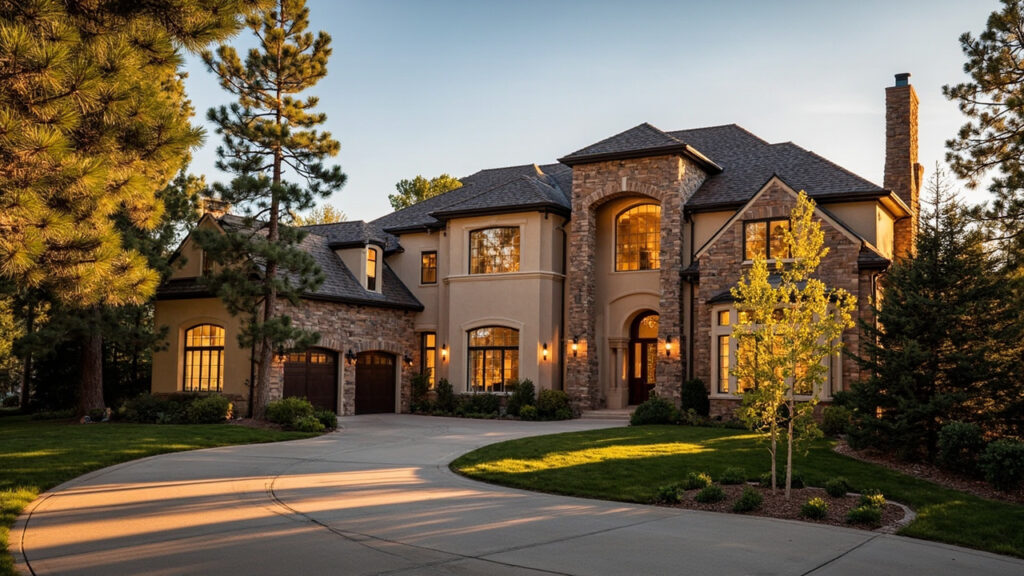
How do I find out what my Denver luxury home is worth?
An accurate value for a luxury Denver home comes from a comparative market analysis built around recent closed sales of similar properties, not an automated online estimate. Because high end homes vary so much in lot size, finishes, and location, pricing them correctly takes a local agent who understands what buyers in that specific price range are actually paying for right now.
Sellers ask this question constantly, and for good reason. Pricing a luxury home wrong in either direction costs money. Price it too high and it sits on the market while buyers assume something is wrong with it. Price it too low and you leave real equity on the table. Getting the number right at the start of a listing matters more in the upper price tiers than almost anywhere else in the market.
Why Online Home Value Estimators Fall Short for Luxury Properties
Automated valuation tools pull from public records and broad neighborhood averages. That works reasonably well for a standard three bedroom home in a subdivision full of similar floor plans. It works poorly for luxury properties because those homes rarely have enough true comparables nearby to feed an algorithm accurate data.
A half acre lot with a pool, a wine cellar, and a recent kitchen renovation does not behave like the house two doors down with none of those features, even if the square footage is close. Online tools also cannot account for view lines, lot orientation, school boundary nuances, or the difference between a home that has been tastefully updated and one that still has original finishes from twenty years ago. In the upper price brackets, these details swing value by six figures, and no algorithm can see them from a satellite photo.
What Actually Determines Value at the Luxury Level
A proper valuation starts with recent closed sales, not active listings. Active listings tell you what sellers hope to get. Closed sales tell you what buyers actually paid. From there, the real work is adjusting for the differences between your home and each comparable: lot size, square footage, age of major systems, quality of finishes, and any recent renovations.
Location within the neighborhood matters more than people expect. A home backing to open space or a golf course carries a premium over an identical floor plan on a busier street. Proximity to top rated schools, walkability to shopping and dining, and even which direction the primary living spaces face can move the number. Current inventory levels play a role too. A neighborhood with very few homes on the market gives sellers more pricing leverage than one where buyers have several similar options to choose from.
The Real Cost of Overpricing a Luxury Listing
The instinct to price high and negotiate down usually backfires in the luxury market. Serious buyers at this price point work closely with experienced agents who track the market daily. They know within days of a new listing hitting the market whether the price reflects reality or wishful thinking.
An overpriced home generates a slow trickle of showings instead of a strong opening week, and that slow start becomes its own problem. Buyers and their agents start asking why the home has been sitting, even if the true answer is simply that the price was off by five percent. Every price reduction after that first quiet stretch signals weakness, and buyers negotiate harder once they sense it. The homes that sell fastest and closest to asking price are almost always priced accurately from day one, based on real comparable data rather than a number the seller wished were true.
What a Comparative Market Analysis Actually Involves
A proper CMA for a luxury home goes well beyond running a report from the MLS. It means physically walking the comparable properties when possible, or at minimum reviewing detailed photos and disclosures to understand finish quality, not just square footage. It means adjusting for differences buyers actually pay attention to, like a primary suite on the main floor versus upstairs, or a finished walkout basement versus an unfinished one.
It also means factoring in how long comparable homes sat on the market and whether they required price adjustments before selling. A home that closed at full price in the first two weeks tells a different story than one that took four months and two reductions to reach the same final number, even if the final sale price looks identical on paper.
Timing and Market Conditions Shape the Number Too
The right price today is not necessarily the right price six months from now. Interest rate movement, seasonal buyer activity, and the number of competing luxury listings all shift what a home can command. A neighborhood that had three active buyers competing for limited inventory in the spring can look very different by late fall, when some of those buyers have already purchased elsewhere.
This is part of why a value estimate has a shelf life. A CMA done six months ago should not be treated as current, especially in neighborhoods where new construction or major renovations have recently closed and changed the comparable landscape.
Getting a Real Answer
For sellers who want an honest, current read on what their home would actually sell for, the most useful next step is a conversation with an agent who works this specific price range and these specific neighborhoods regularly. That means someone who can speak to recent closings, current buyer demand, and the details of your particular property, not a generic report generated from an address.
Sara Garza has spent two decades in Denver luxury real estate, working across South Denver’s most sought after neighborhoods with sellers who need pricing guidance grounded in real market data rather than guesswork.
Frequently Asked Questions
How often should I get a new valuation if I am not ready to sell yet?
If you are watching the market and considering a sale in the next year, an updated CMA every four to six months makes sense in a fast moving Denver luxury market, especially if comparable sales have closed nearby or interest rates have shifted.
Does a recent kitchen or primary bath renovation always add dollar for dollar value?
Not necessarily. High quality renovations that match the finish level buyers expect in that price range typically help, but renovations done with lower end materials or styling that does not match the home’s overall quality tier can add less value than the actual cost of the work.
Should I price above the CMA number to leave room for negotiation?
This is one of the most common mistakes sellers make. Pricing above what the data supports usually results in fewer showings and a longer time on market, which often costs more in the end than pricing accurately from the start and negotiating from a position of real buyer interest.
What if my home has unique features with no direct comparable nearby?
This is where local expertise matters most. An experienced agent will look at comparables in a wider radius or from similar architectural styles and make informed adjustments, rather than relying purely on a formula that assumes every home in a zip code is interchangeable.

Sara Garza
Global Real Estate Advisor · LIV Sotheby’s International Realty
Two decades in luxury real estate, a deliberately limited client list, and a reputation built on patience, candor, and care. More about Sara
Wondering What This Means for Your Move?
Sara reads this market every day. Ask her directly — no pressure, just a straight answer.
Ask Sara(720) 499-4937